 (May 1, 1829) José Martiniano de Alencar (May 1, 1829 — December 12, 1877) was a Brazilian lawyer, politician, orator, novelist and dramatist. He is considered to be one of the most famous and influential Brazilian Romantic novelists of the 19th century, and a major exponent of the literary tradition known as 'Indianism'. Sometimes he signed his works with the pen name Erasmo. Invited by his friend Francisco Otaviano, he became a collaborator for the journal Correio Mercantil. He also wrote many chronicles for the Diário do Rio de Janeiro and the Jornal do Commercio. Alencar would compile all the chronicles he wrote for these newspapers in 1874, under the name Ao Correr da Pena. It was in the Diário do Rio de Janeiro, during the year of 1856, that Alencar gained notoriety, writing the Cartas sobre A Confederação dos Tamoios, under the pseudonym Ig. Also in 1856, he wrote and published under feuilleton form his first romance, Cinco Minutos, that received critical acclaim. In the following year, his breakthrough novel, O Guarani, was released; it would be adapted into a famous opera by Brazilian composer Antônio Carlos Gomes 13 years later. O Guarani would be first novel of what is informally called 'Alencar's Indianist Trilogy' — a series of three novels by Alencar that focused on the foundations of the Brazilian nation, and on its indigenous peoples and culture. The other two novels, Iracema and Ubirajara, would be published on 1865 and 1874, respectively. Although called a trilogy, the three books are unrelated in its plots. Alencar was very close friends with the also famous writer Machado de Assis, who wrote an article in 1866 praising his novel Iracema, that was published the year before, comparing his Indianist works to Gonçalves Dias, saying that 'Alencar was in prose what Dias was in poetry'. When Assis founded the Brazilian Academy of Letters in 1897, he chose Alencar as the patron of his chair.
See if zenosbooks has any books for sale by this author
 (May 1, 1900) Ignazio Silone (1 May 1900 – 22 August 1978) was the pseudonym of Secondino Tranquilli, an Italian author and politician. He was born in the town of Pescina in the Abruzzo region and lost many family members, including his mother, in the 1915 Avezzano earthquake. He suffered from tuberculosis and severe clinical depression, and spent nearly a year in Swiss clinics; in Switzerland Aline Valangin helped and played host to him and other migrants. As he recovered, Silone began writing his first novel, Fontamara, published in German translation in 1933. The English edition, first published by Penguin Books in September 1934, went through frequent reprintings during the 1930s, with the events of the Spanish Civil War and the escalation towards the outbreak of World War II increasing attention for its subject material. Following his contribution to anti-communist anthology The God That Failed (1949), Silone joined the Congress of Cultural Freedom and edited Tempo Presente. In 1967, with the discovery that the journal received secret funds from the United States Central Intelligence Agency, Silone resigned and devoted all his energies to the writing of novels and autobiographical essays. In 1969, he was awarded the Jerusalem Prize, a literary award for writers who deal with the theme of individual freedom and society.
See if zenosbooks has any books for sale by this author
 (May 1, 1900) Aleksander Wat is the pen name of Aleksander Chwat (1 May 1900 – 29 July 1967), a Polish poet, writer, art theoretician and memorialist, one of the precursors of the Polish futurism movement in the early 1920s, considered to be one of the more important Polish writers of the 20th century. In 1919 he was among the young poets to proclaim the advent of new, futuristic poetry. The following year he published the first set of his poems, Pug Iron Stove, which gained much popularity among the supporters of the new trends in literature of the epoch. In 1927 he followed up with a volume of short stories, Lucifer unemployed. Until 1922 he was one of the creators of the influential monthly magazine Nowa Sztuka ('New Art'; appeared 1921-22), followed by Almanachy Nowej Sztuki ('New Art Almanach') and 'the increasingly rabid Communist periodical' Miesięcznik literacki ('The Literary Monthly'). He contributed in the dissemination of the work of Vladimir Mayakovsky and of Futurism in general across Poland, before becoming a supporter of communism. Until 1931 he was one of the main journalists of the Marxist Tygodnik literacki ('Literary Weekly'). Between 1933 and the outbreak of World War II in 1939 he was also the literary director of Gebethner & Wolff, the biggest and the most renown Polish printing house of the time. After the Nazi invasion of Poland in 1939 he moved to Lwów, then under Soviet occupation. Despite his sympathy for Communism, he was arrested by the NKVD in 1940. He was held in detention successively at the former Zamarstinov military prison in Lwów, then in Kiev, at the NKVD's Lubyanka prison in Moskow, and finally at Saratov. Freed from prison in November 1941 under the terms of the general amnesty for Poles prompted by the Nazi invasion of the Soviet Union, he was exiled to Kazakhstan together with his wife Paulina, usually called Ola (1904-1991) and his 9-year-old son Andrzej. During the war one of his brothers was killed in the Treblinka extermination camp. In 1946 Wat was allowed to return to Poland, where he was appointed chief-editor of the State Publishing Institute (PIW). However, the seven years spent in the Soviet Union had cured him of his Communist sympathies, turning him into an outspoken supporter of democracy.
See if zenosbooks has any books for sale by this author
 (May 1, 1909 ) Yiannis Ritsos (1 May 1909 – 11 November 1990) was a Greek poet and left-wing activist and an active member of the Greek Resistance during World War II. Born to a well-to-do landowning family in Monemvasia, Ritsos suffered great losses as a child. The early deaths of his mother and eldest brother from tuberculosis, his father's struggles with a mental disease, and the economic ruin his family marked Ritsos and affected his poetry. In 1931, Ritsos joined the Communist Party of Greece (KKE). He maintained a working-class circle of friends and published Tractorin 1934. In 1935, he published Pyramids; these two works sought to achieve a fragile balance between faith in the future, founded on the Communist ideal, and personal despair. The landmark poem Epitaphios, published in 1936, broke with the shape of Greek traditional popular poetry and expressed in clear and simple language a message of the unity of all people. In August 1936, the right-wing dictatorship of Ioannis Metaxas came to power and Epitaphios was burned publicly at the foot of the Acropolis in Athens. Ritsos also supported the Left in the subsequent Civil War (1946-1949); in 1948 he was arrested and spent four years in prison camps. In the 1950s 'Epitaphios', set to music by Mikis Theodorakis, became the anthem of the Greek Left. In 1967 he was arrested by the Papadopoulos dictatorship and sent to a prison camp in Gyaros. Today, Ritsos is considered one of the five great Greek poets of the twentieth century, together with Konstantinos Kavafis, Kostas Kariotakis, Giorgos Seferis, and Odysseus Elytis.
See if zenosbooks has any books for sale by this author
 (May 1, 1913 ) Victor Stafford Reid (1 May 1913 – 25 August 1987) was a Jamaican writer born in Kingston, Jamaica, who wrote with an intent of influencing the younger generations. He was awarded the silver and gold Musgrave Medals (1955–1978), the Order of Jamaica (1980) and the Norman Manley Award for Excellence in Literature in 1981. He was the author of several novels, three of which were aimed towards children, one play production, and several short stories. Two of his most notable works are New Day - ‘the first West Indian novel to be written throughout in a dialect form’ - and The Leopard. As a writer, Reid aimed to instil an awareness of legacy and tradition among the Jamaican people. His writings reflected many of the social and cultural hardships that pervade the time periods illustrated in his literary works.
See if zenosbooks has any books for sale by this author
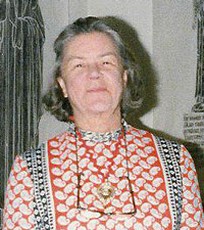 (May 1, 1914) Barbara Howes (May 1, 1914 New York City - February 24, 1996 Bennington, Vermont) was an American poet. She was adopted by well-to-do Massachusetts family, and reared chiefly in Chestnut Hill, where she attended Beaver Country Day School. She graduated from Bennington College in 1937. She worked briefly for the Southern Tenant Farmers Union in Mississippi, and then edited the literary magazine, Chimera, from 1943 to 1947 and lived in Greenwich Village. In 1947 she married the poet William Jay Smith, and they lived for a time in England and Italy. They had two sons, David Smith, and Gregory. They divorced in the mid-1960s, and she lived in Pownal, Vermont. In 1971, she signed a letter protesting proposed cuts to the School of the Arts, Columbia University. Her work was published in, Atlantic, Chicago Review, New Directions, New Republic, New Yorker, New York Times Book Review, Saturday Review, Southern Review, University of Kansas Review, Virginia Quarterly Review, and Yale Review.
See if zenosbooks has any books for sale by this author
 (May 1, 1922) Otto Lara Resende (1 May 1922 – 28 December 1992) was a Brazilian journalist and writer. Resende began teaching French at age fourteen and at eighteen years old began working as a journalist in the Belo Horizonte newspaper O Diário. In his career he worked at literary supplement of Diário de Minas. In Rio de Janeiro, Resende worked for the Diário de Notícias, O Globo, Diário Carioca, Correio da Manhã, Última Hora and Jornal do Brasil newspapers, Manchete and Senhor magazines, and TV Globo. He graduated in Law from the Federal University of Minas Gerais. On July 3, 1979 Resende was elected to the Brazilian Academy of Letters, taking the chair 39, vacant by the death of Elmano Cardim.
See if zenosbooks has any books for sale by this author
 (May 1, 1923 ) Joseph Heller (May 1, 1923 – December 12, 1999) was an American satirical novelist, short story writer, and playwright. The title of one of his works, Catch-22, entered the English lexicon to refer to a vicious circle wherein an absurd, no-win choice, particularly in situations in which the desired outcome of the choice is an impossibility, and regardless of choice, a same negative outcome is a certainty. Although he is remembered primarily for Catch-22, his other works center on the lives of various members of the middle class and remain examples of modern satire.
See if zenosbooks has any books for sale by this author
 (May 1, 1924) Terry Southern (May 1, 1924 – October 29, 1995) was an American novelist, essayist, screenwriter, and university lecturer, noted for his distinctive satirical style. Part of the Paris postwar literary movement in the 1950s and a companion to Beat writers in Greenwich Village, Southern was also at the center of Swinging London in the 1960s and helped to change the style and substance of American films in the 1970s. He briefly wrote for Saturday Night Live in the 1980s. Southern's dark and often absurdist style of satire helped to define the sensibilities of several generations of writers, readers, directors and film goers. He is credited by journalist Tom Wolfe as having invented New Journalism with the publication of “Twirling at Ole Miss” in Esquire in February 1963. Southern's reputation was established with the publication of his comic novels Candy and The Magic Christian and through his gift for writing memorable film dialogue as evident in Dr. Strangelove, The Loved One, The Cincinnati Kid, and The Magic Christian. His work on Easy Rider helped create the independent film movement of the 1970s.
See if zenosbooks has any books for sale by this author
 "(May 1, 1924) Judy Stone (May 1, 1924 – October 6, 2017) was an American journalist and film critic who wrote film reviews for the San Francisco Chronicle from 1961 to 1993. Stone was born in Philadelphia, Pennsylvania, to Russian Jewish immigrants who owned a dry goods store. She was the youngest of four children, all of whom became journalists, including her brother I. F. Stone. Her interest in journalism came early when she wrote a film review of The General Died at Dawn for the student newspaper at Jay Cooke Junior High School. Stone dropped out of school to make walkie-talkies in a factory during World War II. However, she remained in publishing as managing editor for her labor union's newspaper. Following the war, she settled in San Francisco, working as a reporter for the Marin Independent Journal and, later, at the copy desk at the San Francisco Chronicle. Around 1965, she transferred to the Chronicle's Datebook section. Stone also wrote for The New York Times, the Los Angeles Times, and many other national newspapers and magazines. Her books include The Mystery of B. Traven (1977), Eye on the World: Conversations With International Filmmakers (1997), and Not Quite a Memoir: Of Film, Books, the World (2006). Stone died at her Potrero Hill home in San Francisco on October 6, 2017, at the age of 93.
See if zenosbooks has any books for sale by this author
 (May 1, 1927) Morio Kita was the pen name of Sokichi Saitō (May 1, 1927 – October 24, 2011), a Japanese novelist, essayist, and psychiatrist. Kita attended Azabu High School, Matsumoto Higher School (now part of Shinshu University) and graduated from Tohoku University's School of Medicine. He initially worked as a doctor at Keio University Hospital. Motivated by the collections of his father's poems and the books of German author Thomas Mann, he decided to become a novelist. He was the second son of poet Mokichi Saitō. Shigeta Saitō, his older brother, is also a psychiatrist. The essayist Yuka Saitō is his daughter. He has suffered from manic–depressive disorder since his middle age.
See if zenosbooks has any books for sale by this author
 (May 1, 1927) Akira Yoshimura (born May 1, 1927; died July 31, 2006) was a prize winning Japanese writer. He was the president of the Japanese writers' union and a PEN member. He published over 20 novels, of which On Parole and Shipwrecks are internationally known and have been translated into several languages. In 1984 he received the Yomiuri Prize for his novel Hagoku (Prison Break) based on the true story of Yoshie Shiratori.
See if zenosbooks has any books for sale by this author
 (May 1, 1940) Bobbie Ann Mason (born May 1, 1940) is an American novelist, short story writer, essayist, and literary critic from Kentucky. By the time she was in her later thirties, Bobbie Ann started to write short stories. In 1980 The New Yorker published her first story. 'It took me a long time to discover my material', she said. 'It wasn't a matter of developing writing skills, it was a matter of knowing how to see things. And it took me a very long time to grow up. I'd been writing for a long time, but was never able to see what there was to write about. I always aspired to things away from home, so it took me a long time to look back at home and realize that that's where the center of my thought was.' Mason writes about the working-class people of Western Kentucky, and her short stories have contributed to a renaissance of regional fiction in America creating a literary style that critics have labeled 'shopping mall realism.' Mason then went on to write a collection of short stories, Shiloh and Other Stories. In 1985 she wrote her first novel, In Country, which eventually was made into a feature film. She followed In Country with another novel in 1988, Spence and Lila. She has since published several more short story collections.
See if zenosbooks has any books for sale by this author
 (May 1, 1944) Bob Mankoff became The New Yorker's cartoon editor in 1997. He is also the founder and president of Cartoonbank, a division of The New Yorker, which maintains the Internet's only searchable cartoon archive. He has published four collections of his own work and has edited five other New Yorker cartoon collections, most recently The New Yorker's 75th Anniversary Cartoon Collection.
See if zenosbooks has any books for sale by this author
 (May 1, 1973) Srikanth Reddy (born 1973) is an American scholar, poet and writer. He received National Endowment for the Arts fellowship, a Creative Capital Award In 2013, and Guggenheim fellowship in 2018. Reddy delivered the Bagley Wright Lectures in Poetry in fall 2015, and served as a judge for the 2019 Griffin Poetry Prize.
See if zenosbooks has any books for sale by this author